Phoenix
Chapter

2025-2026 Arizona State University Scholars
Arizona State University
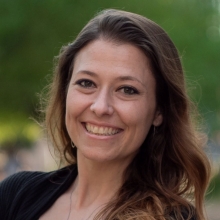
Amanda Acuna
Spetzler Scholar
- PhD Candidate in Neuroscience
- BS in Neuroscience and Psychology from Arizona State University
- Amanda’s work investigates the role of methamphetamine (METH)-induced neuroinflammation on adaptive decision making. METH use results in increased neuroinflammatory signals and immune cell activation, which continue to be observed in abstinence. Her work explores the impact this persistent inflammation has on behavioral flexibility and cue responsivity, two important factors that influence relapse. An additional aim of this work is to determine the potential benefit of an anti-inflammatory medication on these behaviors, with the overarching goal being to uncover novel targets for pharmacotherapies to restore behavioral control.
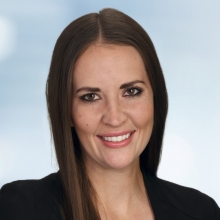
Jessica Chee-Williams
Wilhoit Scholar
- PhD Candidate in Environmental Life Sciences
- MS in Communication Disorders and BS in Speech and Hearing Science from Arizona State University
- Orofacial clefting is among the most common congenital anomalies globally, often leading to challenges in feeding, speech, hearing, dental health, and psychosocial well-being. Jessica’s research aims to translate clinical and imaging advances into improved treatment pathways for children with cleft conditions. Her research includes leveraging advanced imaging technology such as magnetic resonance imaging, identifying social determinants of health that impact care, and educating community partners on cleft treatment. By bridging the gap between research and clinical care, her work will improve the quality of life for children with cleft lip and palate.
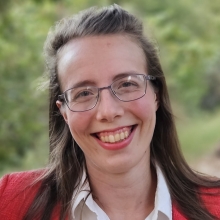
Claire Cropper
Papadopoulos Scholar
- PhD Candidate in Civil, Environmental and Sustainable Engineering
- BS in Mathematics from ASU
- Claire’s current research centers on two key topics: 1) Water security in rural US communities and 2) Environmental impact of menstrual waste. Her water security research focuses on identifying and understanding the complex social fabric of water-insecure communities in Arizona as part of the Arizona Water for All initiative. Identifying patterns in water-insecure communities will help to determine the most effective ways to allocate funding and infrastructure projects. Her second research topic focuses on how soil adsorbs and transports hormones in menstrual waste, with a goal to inform improved wastewater treatment and minimize aquatic risks.
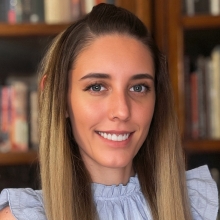
Lillian Hensleigh
The Kemper and Ethel Marley Foundation Scholar
- PhD Candidate in Biochemistry
- BS in Biology and in Chemistry from the University of Redlands
- Lillian’s research efforts probe the fundamental yet use-inspired molecular science of carbon dioxide capture and conversion into non-fossil-based fuels and other value-added chemical products. She is developing materials inspired by biological enzymes, where three-dimensional polymeric microenvironments play a key role in guiding efficient chemical transformations. Through her research, she is also advancing understandings of structure-function relationships in chemistry and contributing to a more sustainable energy future.
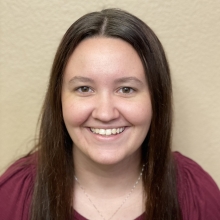
Jenna Diefenderfer
Alison Hunter Johnston Memorial Endowment Scholar
- PhD Candidate in Microbiology
- BS in Biochemistry and Chemical Biotechnology from East Stroudsburg University of Pennsylvania
- Jenna earned her undergraduate degree in Biochemistry and Chemical Biotechnology from East Stroudsburg University of Pennsylvania. As a third-year Microbiology PhD student at Arizona State University, her research leverages untargeted volatile metabolomics for the development of biomarkers and diagnostics for fungal infections in humans and companion animals.
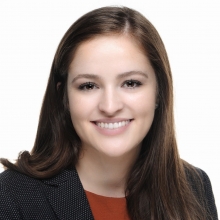
Margaret Dugoni
Spetzler Scholar
- PhD Candidate in Biomedical Engineering
- BS in Chemical Engineering from Villanova University
- Margaret's research efforts are on improving bone repair through the use of immune mediating metabolites to promote bone growth and inhibit bone loss. Her work focuses on hydrogel delivery systems for microparticle drug formulations at the site of a bone defect. This work allows for sustained, tunable delivery of bone growth factors and metabolites to promote bone healing and can further be used in many regenerative medicine applications.
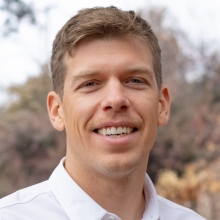
Joshua Gilman
Vandenburgh Scholar
- PhD Candidate in Environmental Life Sciences
- BS in Microbiology from Brigham Young University
- Josh researches the impacts of climate change, urban development, and water policy on the sustainability of dryland regions like Phoenix, Arizona. His work integrates ecology, geography, and social sciences to examine how land and water management decisions affect ecosystem services—the benefits nature provides to people. By understanding these connections, his research helps to assess and improve the sustainability of desert cities.
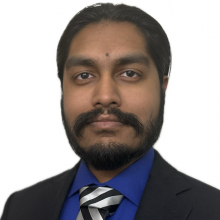
Razine Hossain
Dalke/ARCS Scholar
- PhD Candidate in Electrical Engineering
- BS in Biology from the University of Wisconsin-Stevens Point
- Razine is developing next-generation solar technologies to make them more efficient, accessible, and sustainable. His work focuses on cadmium telluride (CdTe) and cadmium selenium telluride (CdSeTe), materials that offer cost-effective, eco-friendly alternatives to traditional silicon solar cells. Using advanced semiconductor growth techniques, he has helped create and study micron-thin, pure monocrystalline solar devices with improved performance over thicker silicon cells. He also works on semiconductor physics modeling, bridging design and fabrication to accelerate device innovation.
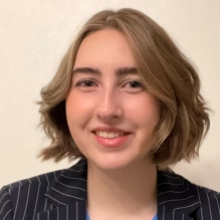
Allison McMinn
Burton Family Foundation Scholar
- PhD Candidate in Electrical Engineering
- BS in Electrical Engineering from Southern Illinois University, Carbondale
- Allison’s research is in Physical Electronics and Photonics focusing on the growth and characterization of superlattice structures for infrared photodetector applications using Molecular Beam Epitaxy (MBE). By continuing to make advancements in infrared (IR) photodetector technology she hopes to push the limits of innovation in fields such as non-invasive glucose monitoring, thermal sensing, gas monitoring, autonomous automobiles, and space-based telescopes.
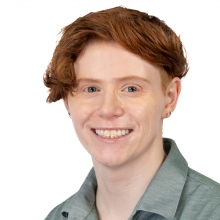
Nora Shapiro
Lauber Endowment Scholar
- PhD Candidate in Civil, Environmental and Sustainable Engineering
- BS in Aerospace Engineering, Earth and Environmental Sciences from the University of Michigan
- Nora researches Ultraviolet-C (UV-C) light delivery methods, using Side Emitting Optical Fibers (SEOF) paired with UV-C Light Emitting Diodes (LEDs) for water treatment applications. UV-C light is biocidal in nature, and it can also be used to activate chemical reactions with photocatalysts within water for things like pollution degradation or hydrogen peroxide generation. UV light dissipates quickly in water systems, so SEOFs allow for direct light distribution over larger areas than low-power, mercury-free LEDs can achieve on their own. Nora uses the LED-SEOF system to research how water treatment systems can have less chemical waste and higher energy efficiency.
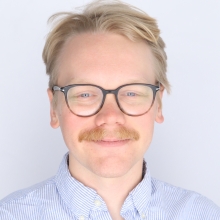
Nathan Stromberg
Horejsi Charitable Foundation Scholar
- PhD Candidate in Biomedical Engineering
- MS in Electrical Engineering from ASU; BS Mathematics and Computer Science from University of Kentucky
- Nathan’s work focuses on efficiently adapting existing machine learning models to ensure equitable predictions for underrepresented groups, even with unreliable or unavailable data annotations. His recent directions include fair image generation and theoretical foundations for fair machine learning in extremely deep neural networks.

Allison Bayro
Wilhoit Foundation Scholar
- PhD Candidate in Biomedical Engineering
- BS in Biomedical Engineering from the University of Illinois at Chicago
- Allison is researching how to improve training and selection for Navy pilots using virtual reality. She studies how physiological signals—such as changes in heart rate and stress response—reveal differences in abilities during flight simulation. By analyzing how pilots navigate and react to anomalous events, her work helps identify individual strengths and training improvements. She collaborates with the Naval Research Laboratory to apply this research in real-world settings, with prior support from the National Science Foundation at the Naval Air Station in Pensacola, Florida.
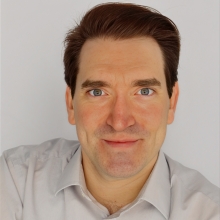
Stephen Gallegos
Theresa F. Jennings Memorial Scholar
- PhD Candidate in Speech and Hearing Science
- BS in Interdisciplinary Studies from Arizona State University
- Stephen's research develops tailored support programs for autistic adults which enhance social skills, independence, and clinician training. Early findings show improved satisfaction and effectiveness. Additional research explores sex-based differences, cognitive aging, and verbal fluency challenges in autism, contributing to precision medicine. By shifting interventions from deficit-based to strength-focused approaches, this work aims to improve quality of life, communication, and long-term support for autistic individuals across their lifespans.
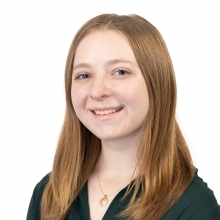
Samantha Harker
Marie McSpadden Sands Scholar
- PhD Candidate in Neuroscience
- BA in Medical Humanities; MS in Neuroscience from Arizona State University
- Sammie's research addresses the genetic contributors to aging and sex differences on cognition and brain structure in a longitudinal cohort of middle-aged and older (MA+) autistic adults 40-75 years of age. She evaluates the effects of autism risk genes on memory decline and temporal lobe/hippocampal aging in MA+ autistic adults. Results will significantly impact the biological understanding of cognitive, brain aging, and sex differences in autism by incorporating both molecular and systems-level approaches. The dissemination of findings to the broader autism community will be empowered by Sammie's unique perspective as an openly autistic adult.
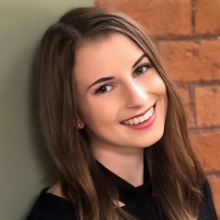
Rachel Eder
Crouch/ARCS Scholar
- PhD Candidate in Molecular and Cellular Biology
- BS in Biological Sciences; Neuroscience; Psychology and MS in Molecular and Cellular Biology from Arizona State University
- Rachel uses a single-cell approach to provide new insights into how cells respond to stress, which can help to understand how cells regulate their transcriptomes in response to environmental change; identify the selective pressures that shape cell evolution; and build better predictive models of individual cell behavior and disease states.
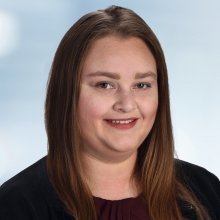
Briana Ondatje
Helen Jacobsen Pierson Scholar
- PhD Candidate in Neuroscience
- BS in Cell and Developmental Biology from UC Santa Barbara
- Briana is currently investigating the role of neuroinflammation in Amyotrophic lateral sclerosis (ALS) and frontotemporal dementia (FTD). Her research aims to answer how the immune cells of the brain communicate with one another and how this becomes dysfunctional in ALS/FTD and contributes to disease pathology. She uses induced pluripotent stem cells (iPSCs) derived from patient blood to model these disease cell types. Understanding crosstalk between the cells of the brain can reveal novel targets for therapeutics for ALS/FTD.
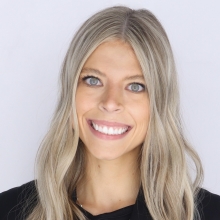
Taylor Pennington
The Kemper and Ethel Marley Foundation Scholar
- PhD Candidate in Biomedical Engineering
- BS and MS in Biomedical Engineering from Arizona State University
- Taylor studies how different cells in the brain utilize nutrients to maintain energy balance and physiological function. She is studying how metabolism is tied to cell health and identifying pathways vulnerable to neurological disease. Her research leverages 3D organoids derived from human stem cells to understand how metabolic traits are established in different cells throughout development and aging. The overall goal is to understand how metabolism influences cortical health and degeneration to improve treatment strategies for sporadic disease.
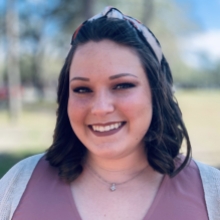
Amberlyn Simmons
ARCS Scholar
- PhD Candidate in Biomedical Engineering
- BS in Biomedical Engineering from the University of Florida
- Amberlyn’s current research project seeks to better understand differences between males and females in the immune response after traumatic brain injury. This work will have a positive impact by aiding in the development of treatments of traumatic brain injury, fundamentally advancing the field of nanomedicine and drug delivery to the injured central nervous system.
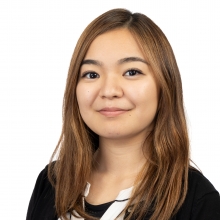
Maya Suzuki
Theresa F. Jennings Memorial Scholar
- PhD candidate in Civil, Environmental, and Sustainable Engineering
- BS in Environmental Science from Duke University
- Maya is developing cost-effective, innovative ways to remediate watersheds impacted by abandoned mines. She is using novel membrane biofilm reactor technology to remove and capture heavy metals from mining-impacted waters. After graduating, Maya is interested in translating this technology into the field by scaling up the membrane biofilm reactor. In the past year, she was also involved in policies on abandoned mines, having worked on a project compiling sites that could qualify for “Good Samaritan” cleanups under the new Good Samaritan Act for Abandoned Hardrock Mine Remediation.
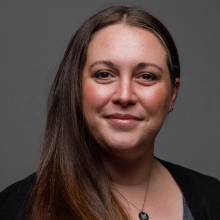
Savannah Tallino
Ivy Foundation Scholar
- PhD Candidate in Neuroscience
- BS in Natural Sciences and MS in Biological Sciences from the University of Alaska Anchorage
- Savannah’s research explores the cellular mechanisms that contribute to neurodegeneration. She is interested in understanding how basal forebrain cholinergic neurons – which are crucial for learning and memory, attention, and other cognitive functions – degenerate early in Down Syndrome and Alzheimer’s Disease. Her work focuses on understanding the role of the protein Intersectin 1 within neurons and what happens when it is elevated in Down Syndrome and Alzheimer’s Disease.
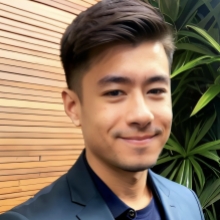
Kelvin Tran
LaFollette Endowment and Libby Endowment Scholar
- PhD Candidate in Speech and Hearing Science
- BS in Health Sciences and MS in Science of Health Care Delivery from Arizona State University
- Kelvin’s research aims to enhance how we understand and identify dysarthria, a speech disorder caused by damage to the nervous system. His goal is to identify distinct profiles for each of the various dysarthria subtypes. These findings help to enhance diagnostic accuracy, refine current approaches to speech therapies, and aid in the development of a data-driven framework for dysarthria classification.
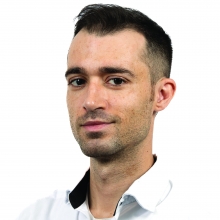
Chris Vito
Marley Foundation Scholar in Memory of Bud Webb
- PhD Candidate in Environmental Life Sciences
- BS in Geoscience from Drexel University
- Chris is studying how climate change will affect the below-ground components of dryland ecosystems. To investigate how plant roots grow and respond to changes in rainfall, he applies machine learning and remote sensing technologies to long-term ecological experiments. This research will provide critical information about changes in the functioning of dryland ecosystems, which cover over 40% of the Earth’s land surface and house nearly a fifth of the world’s human population.
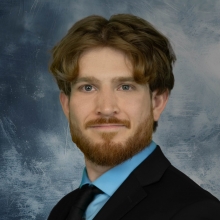
Dominic Saiz
Sonntag Family Scholar
- PhD Candidate in Molecular Biology
- BS in Biological Sciences and Anthrolopology from ASU
- Dominic is studying how diet influences intestinal stem cells at the chromatin level. His research investigates how a high-fat diet alters chromatin accessibility, impacting gene regulation and increasing the risk of diseases like colorectal cancer. By using genomic and computational approaches, he investigates the role of key transcription factors in these changes. His work provides insights into how diet-driven molecular changes affect intestinal health.